I went to a popular historical museum in North Carolina with my mother to celebrate our spring birthdays. We joined the line, sent our backpacks through security, and walked over to pick up the audio tour headsets that accompanied the self-guided experience. The mansion was three floors, over 30 rooms, more than 60 minutes of recorded audio, taking visitors roughly two hours to cover the estate.
The Trouble with Museum Audio Tours (in America)
At the desk, I explained that I'm deaf and asked for an alternative to the audio tour so I could enjoy the experience alongside my family. I was handed a thick packet of worn, stained papers, a printed transcript of the audio tour. I was grateful. Not every museum even has that option. But I had called ahead to confirm as I normally do.
My mother has always been one of my fiercest advocates. She's been part of my disability journey since I got my first pair of hearing aids at age five. She didn't complain as she finished each stop in half the time it took me. She paused her audio tour, took in every detail, the architecture, the grand paintings, the fabrics on every piece of furniture, and patiently waited. On the third floor, we hovered by the tiny windows so I had enough light to read the transcript and in the basement she snapped this photo of me.
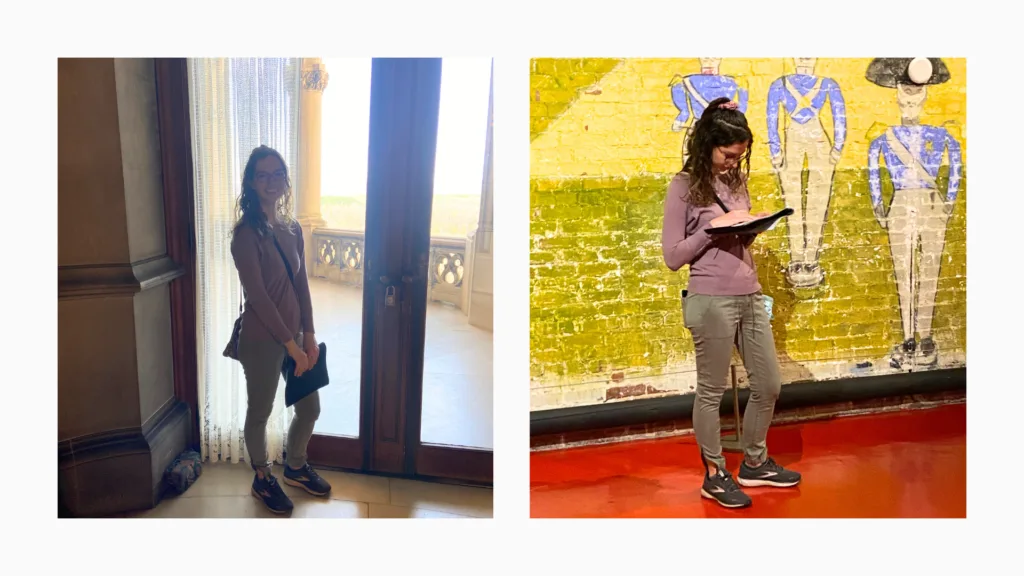
Alt text: Collage of two pictures. On the left, Rebecca stands indoors by a window holding the printed transcript. On the right, Rebecca is reading the transcript in front of a mural.
Four hours later, we finally walked out. I was exhausted. All I wanted was to stretch out on the grounds with the picnic we'd packed and my hearing aid out.
After refueling, we skipped the in-person guided garden tour, there was no interpretation available. We wandered through rows of tulips, sculptures, and winding trails on our own. My mother asked if I'd enjoyed the day, and of course I said yes. How could I not? She tilted her head and said, "You know, after all these years, there are so many things in your life that are so much harder and I never really think about it until we do things like this together."
When an experience isn't the mainstream experience, you just … don't think about it. But as I shuffled through out-of-order papers to match the tour stops, surrounded by crowds of visitors in headsets glancing my way, I'm pretty sure they started thinking about it too. My experience was not the equivalent of theirs. And it didn't have to be that way.
The Deaf Experience at an International Museum
One year later, spring came again, but this time, instead of birthday celebrations, my mother and I were fighting. I had been invited on my first international work trip to France. It wasn't my first time abroad, but it was my first time going solo. My mother was terrified for my safety as a deaf traveler.
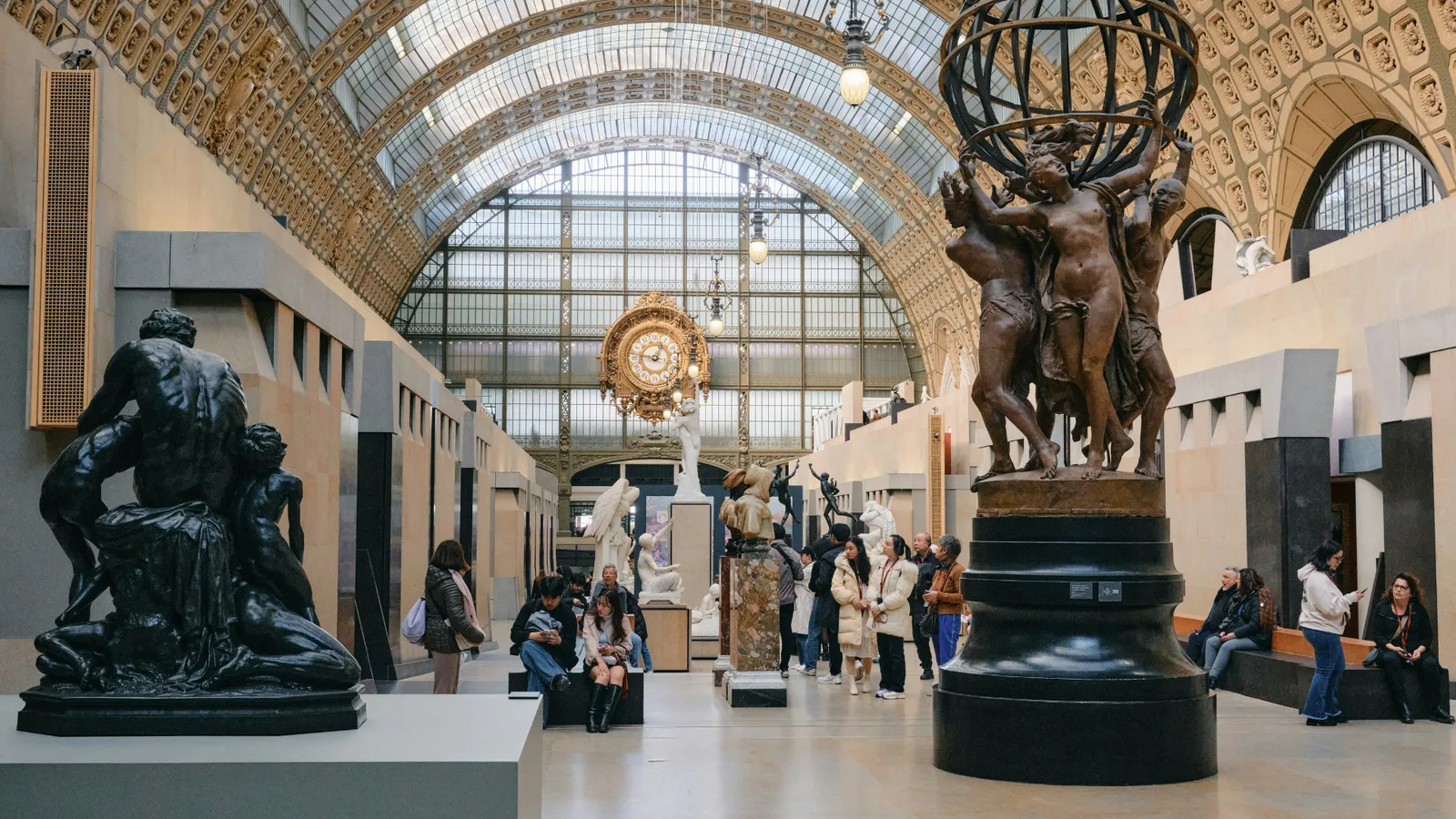
The thing about stubbornness is that families pass it down, mother like daughter. So off I went with the promise of regular updates. First stop: Paris. Day one's agenda: art museums. I chose Musée d'Orsay over the Louvre because my time was limited, and the Impressionist era has always been my favorite.
At the front desk, I explained as best I could that the induction loop wouldn't work for me. My hearing loss is too profound for a T-coil, it produces a garbled mess with no clarity. It's a great option for many hard-of-hearing visitors, but not for me.
I had known about the induction loop from the museum's website, but what I didn't know was that another option existed. The same tablet distributed to every visitor had a standard headphone jack, but it also allowed you to select your language and read about each exhibit in your chosen language. One of those languages was LSF, French Sign Language, which brought up a video translating each artwork's history into a signed message.
Since American Sign Language is derived from French Sign Language, I understood far more than I expected. Whatever I missed, I could read in English.
I texted my mom a version of this video from inside: "Look, it's accessible!!"
https://www.youtube.com/shorts/MCUf7pOw778
Museum Accessibility: When the Experience Is Equal
There's something about international museums, an ingrained commitment. (The U.S. has some catching up to do!) They consider the experience of every person who walks through their doors. Where are they from? What challenges might they face? Whether it's a wheelchair user navigating mobility-accessible routes or a blind visitor engaging with tactile versions of paintings and sculptures, the questions are considered and it shows.
Accessibility in museums is a wide and sometimes overwhelming topic. But when your commitment is for the arts to serve all people, you can lean on those communities to help you figure out what an inclusive space actually looks like.
If you are looking for support with museum language accessibility and adapting exhibits to be inclusive for Deaf and Blind communities, that’s something we can help you out with at ICS. If you are looking for support with other areas of accessibility such as mobility access, we can refer you to experts for the right guidance.
More Advice that You Didn’t Ask For
One more thing worth saying: keep looking to international museums for inspiration. Every institution has to start somewhere, but that doesn't mean you can't dream big.
I also encourage museums to think about which accessibility features best match their exhibits. A permanent exhibit, for example, benefits from permanent accessibility assets: sign language videos, audio descriptions, and tactile models. A visiting or traveling exhibit, on the other hand, is often better served by scheduling interpreters to join the tour.
3D Printed Models, Sign Language Videos, and Captions … Oh My!
I'm not the only person on the ICS team with a love for museums, art, and history. It's one of the passions of Shelby Edwards, co-founder and CEO of ICS. When Shelby traveled to Florence, Italy, I insisted on a full report from every museum she visited.
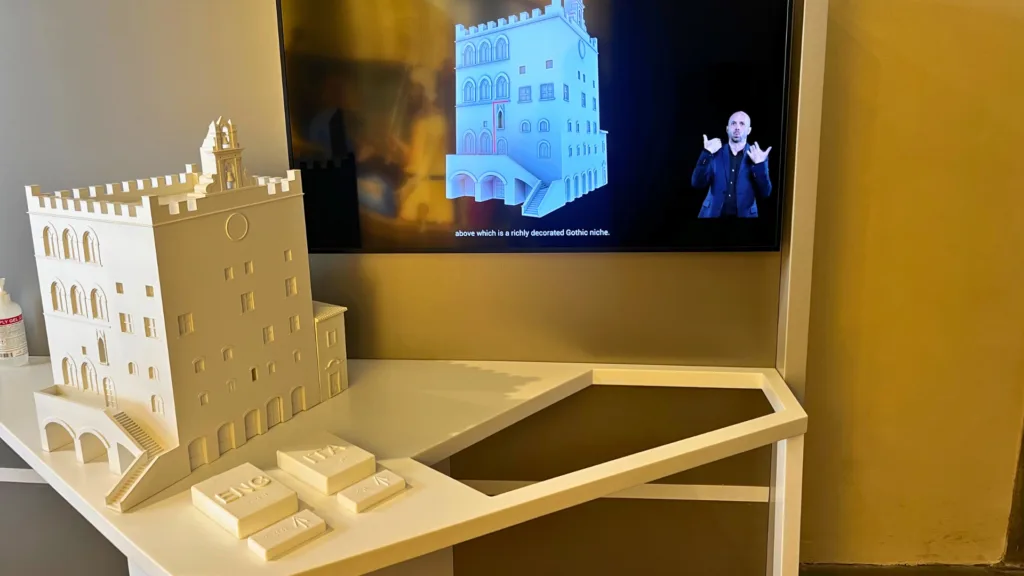
Alt Text: White 3D-printed architectural model with Gothic features next to a screen showing a digital version on video with a sign language interpreter and captions.
Museo di Palazzo Pretorio stood out for its thoughtful accessibility features, a unique exhibit that brings to life the history of a building that once served as a prison before it became a home for art. Here's what made it exceptional:
- A tactile model allowing blind and low-vision visitors to feel the architecture of the building while listening to an audio description
- A video exploring the building's history, complete with captions and sign language interpretation
- Captions available in both English and Italian
- Sign language interpretation available in Italian Sign Language and International Sign
View a quick video of the picture above in action.
https://www.youtube.com/shorts/HruF6FWz0ac
These are just a few of the museums we've visited that have made permanent, meaningful accessibility a priority. We'd love to hear about others, drop your recommendations in the comments!