

Accessibility
VRI vs. On-Site Interpreting: How to Choose
A practical comparison for event planners, coordinators, and access leads weighing Video Remote Interpreting against sending an interpreter in person.
July 10, 2026 · 3 min read
By Rebecca Hull · · 11 min read
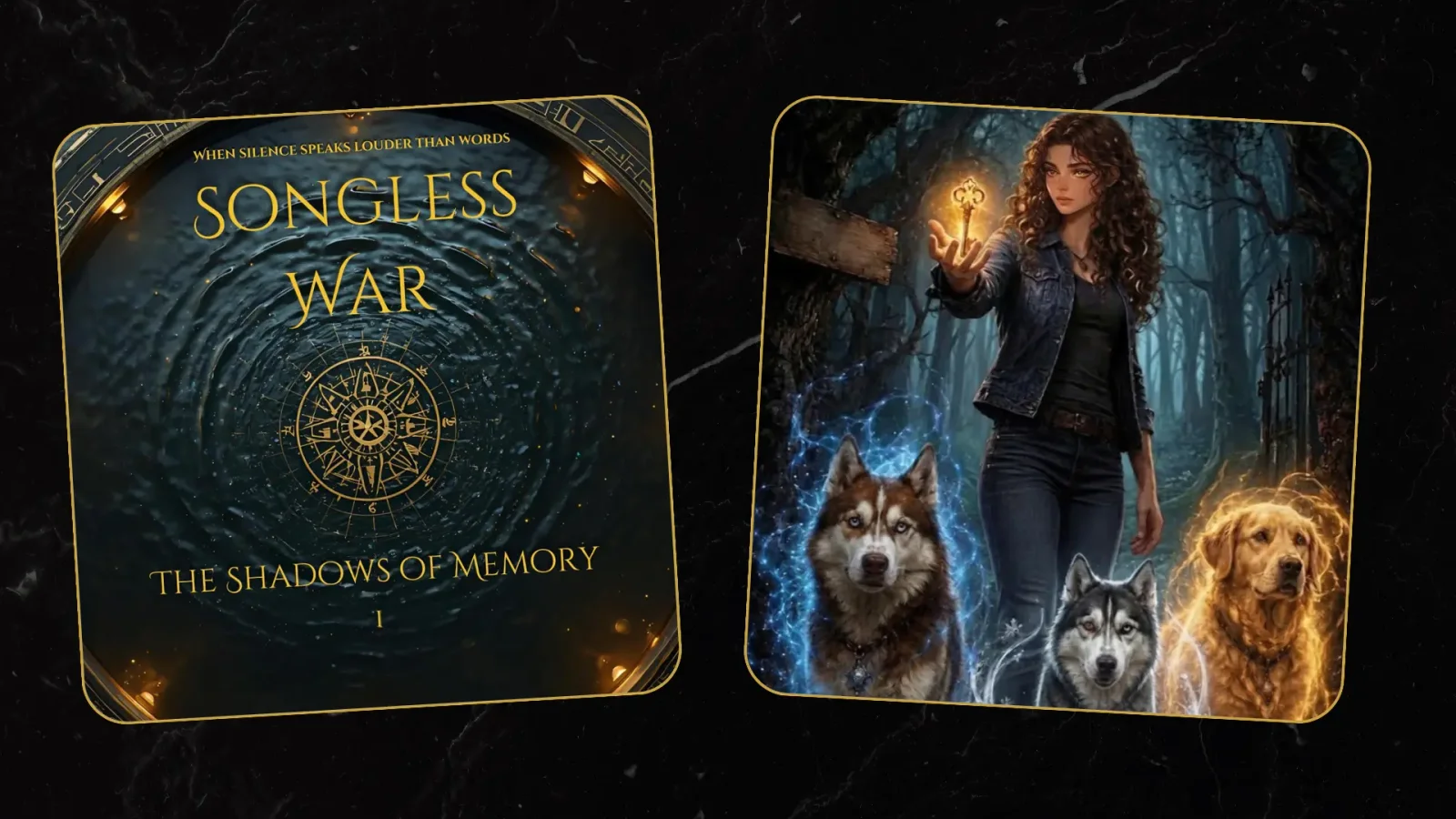
Introducing the first fantasy saga where ASL is the magic system. Songless War: The Shadows of Memory is the first book in a nine-book fantasy series written by Deaf author Nicki Runge and independently published.
We’ve read some incredible books featuring Deaf characters and stories, but much of the Deaf representation we see in literature tends to come through memoirs or young adult (YA) fiction. To our knowledge at Inclusive Communication Services, Songless War is the first fantasy saga we’ve come across with Deaf characters written by a Deaf author. And honestly, we think that’s pretty magical.
We sat down with Nicki to get the inside scoop on the world of Songless War. She shares why sign language is simply the better magic system, talks about her creative process, and opens up about what it means to create Deaf representation in fantasy.
“Writing to satisfy everyone gets you something careful, and careful isn't what anybody wants to read.”
Give the full interview a read, and be sure to scroll to the bottom for all the details on where you can order your own copy of Songless War: The Shadows of Memory.
Some inheritances are worth dying for. Others are worth killing for. Mary Peterson has been Deaf her entire life — until that's ripped away from her. When supernatural hearing is forced upon her, she discovers her silence was hiding more than she ever imagined. Now she can hear things no one else can: whispers in the earth, warnings from a woman trapped between worlds, and the approach of something ancient and hungry.
Some doors should stay closed. Mary is about to open one anyway.
Writing a Deaf character as a Deaf author meant I wasn't researching Mary — I was remembering her. Her journey is my journey.
I've read a lot of Deaf characters written by hearing authors, and I always come away with the same question: do they actually understand what it's like to be this person, or do they only understand what it looks like from the outside? Those are two very different books.
Two things shaped it. Harry Potter, obviously — everyone's touchstone for a magic system. But Elfquest got there first for me. I read it when I was young, and there was Rillfisher, a Wolfrider who didn't speak. Finding a character like that in a fantasy comic as a kid stayed with me for years. But I always wanted more than what I found there. Mary is what "more" looks like.
What I wanted the magic to capture is that ASL isn't a set of words done with your hands. It's space, movement, direction, and expression, all working at once. A single sign can carry who's doing what to whom, how fast, and how you feel about it — in one motion. A spoken incantation is a line. A sign is already three-dimensional. It was simply the better magic system.
The part that matters most to me is that in Book 1, Mary is new at it. She's still learning, and she gets scared using her magic because it's unfamiliar in her hands. That isn't only fantasy. That's how we develop our sign language to find our identity — it's frightening before it becomes power.
There are three different signed languages in the book. ASL is Mary's own language — how she actually lives and communicates. The magic works differently: it uses word-specific signs rather than conversational ASL, because casting isn't conversation. And the Dark Man doesn't use ASL at all. He uses an ancient sign language.
That last one is invented, but it isn't arbitrary. No single ancient sign language survives intact, but historical and archaeological records show that visual and gestural communication existed across many ancient civilizations — for trade, for religious vows of silence, for any time speech was absent or forbidden. People have always found ways to speak with their hands. I wanted the Dark Man's power to come from that older place.
What I refused to flatten was that signing varies between people, the way speech does. Mary's parents, Helen and Frank, are hearing. Their signing is rusty, and they sign and speak at the same time. Other characters sign in ways that tell you something about who they are before they ever tell you themselves. Deaf readers will recognize all of it.
The smallest choice may be the one hearing readers notice most: in my book, said and signed are two different words. If a character said it, they spoke. If a character signed it, they signed. I never collapse those into one.
Honestly, the language came first and the history came second. I built what the story needed — something older than ASL, something that felt like it predated any of us — and then I went looking to make sure I wasn't inventing something impossible.
What I found is that I wasn't. Gestural communication turns up everywhere in the historical record: trade between peoples with no shared spoken language, religious communities under vows of silence, any situation where speech wasn't available or wasn't allowed. No single ancient sign language survives intact, which gave me room to invent. But the idea that people have always spoken with their hands is not invented at all. That's just true.
That's what I wanted underneath the Dark Man — the sense that his language is older than anyone's memory of it.
I researched it for a long time before I decided. Traditional publishing is one of the hardest doors to get through — you're querying agents, waiting months, hoping someone says yes. And when I looked at the numbers, indie authors keep far more of what each copy earns. That mattered to me.
But it also meant control. This book is mine — the story, the timeline, the cover, when it comes out. Nobody had to approve it first.
Everyone tells you the hard part is finishing the book. Nobody tells you about the ISBN.
Going indie means you handle the machinery yourself, so I bought my own ISBN rather than taking a free one from a retailer — that way the book is registered to me, not to a platform. My paperback is distributed through IngramSpark, which is what puts it in front of bookstores. Then I went to set up the release on KDP and hit a wall: the system told me my ISBN was already published to Amazon.
It wasn't a mistake, exactly. It was two systems that both knew about my book and disagreed about who got to list it. There's no chapter in any writing guide about that.
Here's the honest answer to "how did you navigate it": I'm still navigating it. I did the research, I set it up the best I could, and now I'm trusting the system to work. September 1 is the day I find out. I'm nervous about it.
That's the part nobody prepares you for. The writing is the part you control completely. Everything after it runs on other people's systems, and you learn them by walking into them and finding out.
I feel it. When you're early, people read your book as though it's speaking for everyone, and that's a lot to hand one story.
But I've also decided I can't write from inside that pressure. This is my story. I've had readers and editors suggest changes — some of them thoughtful, from people I respect — and there are places where I've said no. Not because the feedback was wrong, but because I'm nine books into a plan they've only read one book of. Some of what looks like a choice I shouldn't have made in Book 1 is a door I opened on purpose.
I listen. I take it seriously. And then I write my book.
(and does the pressure ever get in the way of just telling a good story?)
It would if I let it. Writing to satisfy everyone gets you something careful, and careful isn't what anybody wants to read. Mary makes choices readers won't like. Things happen to her that are hard to sit with. That's the story.
Because fantasy is what I've loved my whole life. Disney, anime and manga, and the films I grew up on in the eighties — Unico, The Last Unicorn, The NeverEnding Story. Nausicaä of the Valley of the Wind is the one I've watched over and over and over. And I collected Elfquest.
I gave that genre decades. And in all of it, I almost never saw myself. Fantasy is the genre that lets you imagine anything — different worlds, different bodies, different rules — and somehow Deaf characters were the thing it couldn't imagine.
When Marvel's Eternals gave us Makkari, played by a Deaf actress, I was genuinely excited. Not because it was perfect, but because it existed. And then I wanted more. That's usually where books come from — you wait for something, it doesn't arrive, so you write it.
Fantasy is the genre I love. It's the one I wanted to be in. So that's where I put her.
Mary looks like I used to — long curly hair. Though I've never had golden eyes.
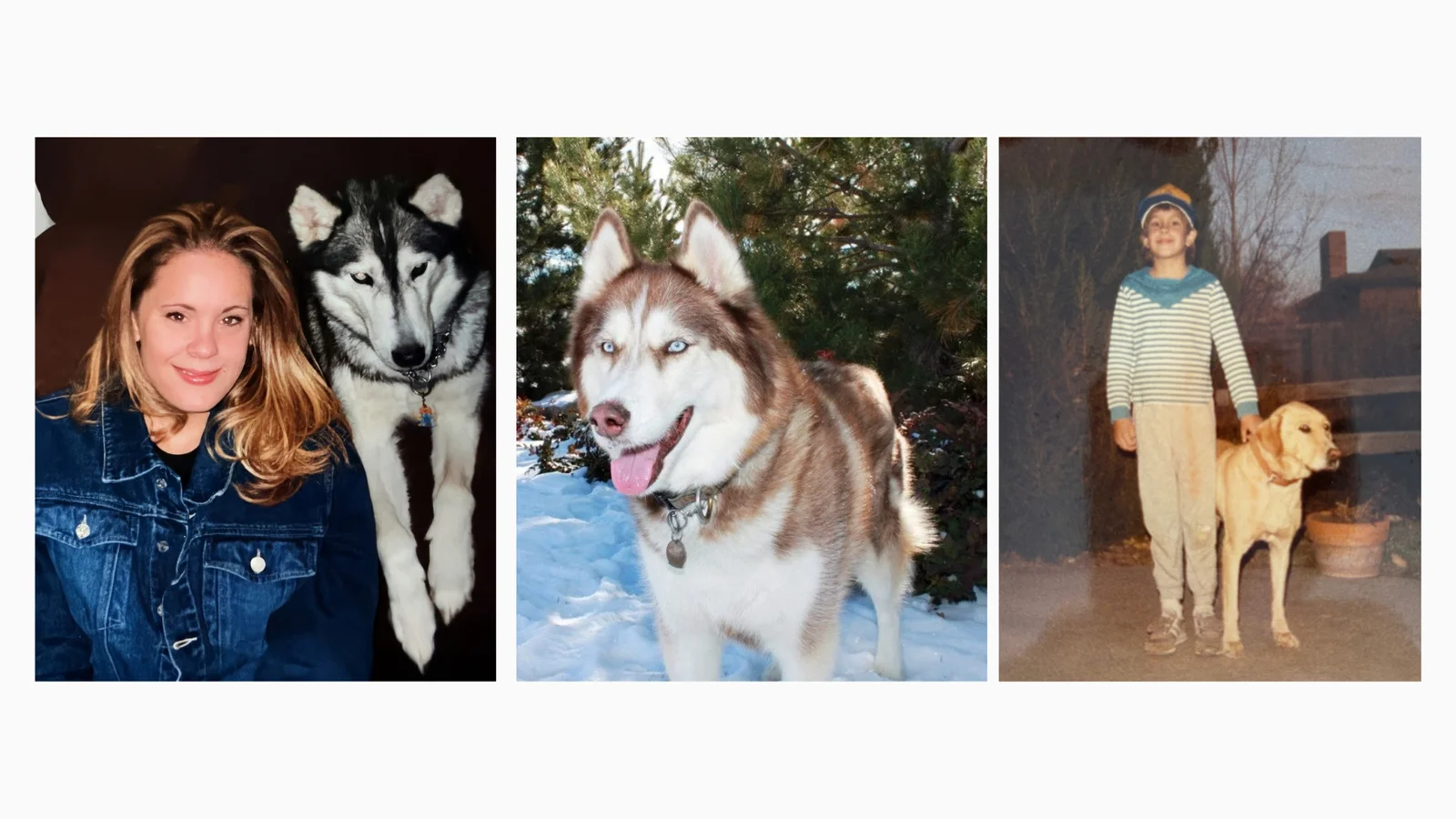
The real answer is the dogs. Taffy, Jenna, and Aleu were my dogs. One from childhood, one from college, one from my adult life — the three I was closest to across my whole life. Putting them in the book was how I brought them back. They're guardians in the story. They were guardians before that.
Like Mary, I've been Deaf my entire life, and like Mary, my parents are hearing.
The differences are real too. Mary loves her garden, and I have no experience with gardening at all.
But the biggest difference is the thing the whole book turns on. Mary's Deafness is taken from her — the Dark Man forces hearing on her, and that's where she loses her identity and has to fight to find her way back. I've never had that experience. I've been Deaf my whole life and I still am.
So when I said I wasn't researching Mary, I was remembering her — that's true right up until the moment she stops being Deaf. Everything after that, I had to imagine. It's the one part of her I couldn't pull from my own life.
Yes. I have a timeline mapped for all nine.
There are clues planted throughout — things readers will have to piece together as they follow Mary. Some of them are sitting in Book 1 right now, and they won't look like anything yet.
Here's my promise: Book 8 is going to hit everyone. I want people to be shocked. And Book 9 is where it all gets explained — the truth about the Dark Man, about the Shimmer Woman, about why any of it happened at all. It's the answer to every question the series has been asking.
That's why I don't panic when someone tells me a choice in Book 1 was the wrong one. I know where the door leads. They've only seen it open.
Beyond that, I have ideas for spin-offs if readers love this world, and books for children and for adults further down the road. But nine is the commitment I've made. I intend to keep it.
Songless War: The Shadows of Memory is on Amazon in both ebook and paperback.
The paperback is also distributed through IngramSpark, which puts it in a catalog of more than 40,000 bookstores, libraries, and retailers worldwide. That means any bookstore can order it for you — your local independent, Barnes & Noble, anywhere. If it's not on the shelf, hand them the title and they can bring it in. Same with your library. Ask them to carry it.
Everything is linked at nickirunge.com.
If you read it, the single most useful thing you can do is leave a review. Amazon, Goodreads, anywhere you talk about books. Reviews are how a debut novel from an indie author gets found at all — a book with no reviews is invisible, no matter how good it is. It costs you nothing and it matters more than you'd think.
And one more thing: I'm ready to travel. Book signings, lectures, school visits, conferences, Deaf events — I want to be out there talking about this book and about Deaf storytelling. If you're organizing something, reach out. My email is the best way to find me.

Rebecca Hull
A monthly note with accessible events, resources worth reading, and what we are working on.
Tell us what you’re planning and a coordinator will come back with options and pricing.
A practical comparison for event planners, coordinators, and access leads weighing Video Remote Interpreting against sending an interpreter in person.
July 10, 2026 · 3 min read
I went to a popular historical museum in North Carolina with my mother to celebrate our spring birthdays. We joined the line, sent our backpacks through security, and walked over to pick up the audio…
May 8, 2026 · 6 min read
Four years after The Expanded Language Access Law was adopted in New York, state representatives are now opening discussions around the official inclusion of American Sign Language (ASL). This blog lo…
April 18, 2026 · 4 min read