Digital accessibility is no longer optional. It’s becoming an essential part of how websites, apps, and online tools are built and used. With more people relying on digital services every day, there’s a growing push to make sure these platforms are usable by everyone, including people with disabilities. In 2026, organisations are not only prioritising compliance but also turning to AI digital accessibility solutions to scale audits, remediation, and monitoring more efficiently. As a result, we’re seeing some major shifts in how accessibility is planned, implemented, and sustained. Here are the top trends you should be paying attention to this year.
Digital Accessibility Trends in 2026
Here’s a closer look at how digital accessibility is evolving in 2026 and what that means for websites, apps, and everyday users.
1. WCAG 2.2 AA is Now the New Minimum
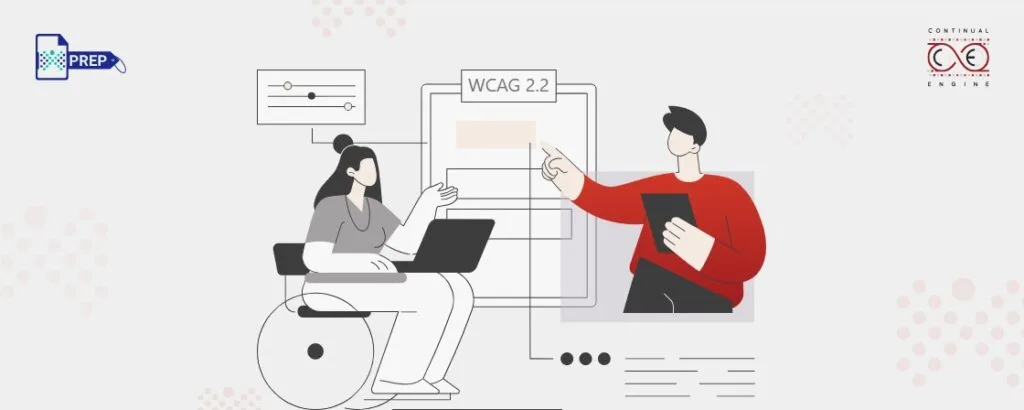
Illustration of two people reviewing WCAG 2.2 accessibility guidelines on a digital interface, including a wheelchair user working on a laptop.
In 2026, WCAG 2.2 AA has officially replaced older 2.1 standards as the new legal baseline for digital accessibility. It’s now the expected minimum for websites, apps, and digital services, especially in government and public-facing platforms. These updated guidelines include better support for keyboard use, low vision, and cognitive accessibility.
2. Accessibility is Shifting to the Start of Every Project
Accessibility icons representing hearing, mobility, and visual impairments on a light background.
Until recently, a lot of teams would wait until the end of a project to "check for accessibility." In 2026, that mindset is being replaced. Thanks to stronger laws like the European Accessibility Act and tighter enforcement under the Americans with Disabilities Act, organisations are realising that accessibility cannot be an afterthought. Instead, it is being built into the design and development process from the beginning. This approach helps avoid expensive fixes later and reduces the risk of legal trouble. It also makes for better products overall.
3. One-Click Widgets Are Out, Real AI Support Is In
You’ve probably seen websites that claim to be accessible just because they added an accessibility overlay or widget. In 2026, the industry is moving away from these tools. Many experts and disability advocates have pointed out that such add-ons rarely fix real problems and can even make things worse for screen reader users. Instead, AI is now being used in more meaningful ways. Developers are using smart tools that help them find and fix problems in their code faster. These tools still need human guidance, but they make the entire process more efficient.
4. Full Audits Are Taking Over From Quick Scans
For years, companies relied on automated scanners to check their websites. But those tools often only catch a small fraction of actual issues. In 2026, there is a bigger focus on full accessibility audits. These audits are done by experts who review websites or apps manually, test them with screen readers, and report problems with context. They give a much clearer picture of what needs to improve and help teams track long-term progress. It requires more effort, but it often yields better results.
5. More Focus on Cognitive and Learning Accessibility
There has been growing recognition that accessibility is not just about screen readers or colour contrast. In 2026, more attention is being paid to how websites and apps affect users with ADHD, autism, dyslexia, or other cognitive differences. That includes reducing visual clutter, using consistent layouts, keeping instructions simple, and offering options to reduce animations. These changes benefit everyone, but they are especially helpful for people who often get left behind by overly busy or confusing designs.
6. Real People Are Testing More Products
Automated tools have limits. That’s why more teams are involving people with disabilities in testing. This kind of feedback helps uncover issues that tools miss and gives developers a better understanding of how real users experience their product.
7. Websites Are Now Expected to Respect Device Settings
People with motion sensitivity or light sensitivity often set their phones or computers to dark mode or reduced motion. In the past, many websites ignored those settings. But in 2026, respecting system-level preferences is becoming part of standard accessibility practice. That means if a user has chosen to avoid motion or prefers dark mode, the website should follow suit. It is a small detail that can make a big difference in user comfort.
8. AR and VR Interfaces are Being Designed to Include Everyone
With virtual reality and 3D experiences showing up in education, e-commerce, and workplace tools, accessibility in immersive design is becoming urgent. This year, developers are learning how to make AR/VR content usable by keyboard, screen reader, and alternative input devices. It’s a newer space, but the push to include everyone in immersive environments is picking up speed.
9. AI Is a Powerful Tool, but Human Review Is Still Essential
In 2026, AI will be widely used to scan digital content, identify accessibility issues, and suggest fixes at scale. This helps teams work faster and manage accessibility across large websites, apps, and document libraries. However, AI cannot fully understand real user experience or judge whether something is truly usable for people with disabilities. That is why human experts are still essential. Accessibility professionals review AI findings, test with assistive technologies, and make final decisions to ensure compliance and meaningful usability. The strongest accessibility programs use AI as a support tool, not a replacement for human judgment.
Closing Thoughts
At the end of the day, digital accessibility is about real people trying to use everyday websites and apps without frustration. In 2026, more teams are finally starting to design with users in mind instead of treating accessibility as a last step. As these changes become normal practice, the internet will slowly become easier, safer, and more comfortable for everyone to use.
Emilie Brown works with the Content Marketing team at Continual Engine, a leading AI-based accessibility solutions provider, which enables organizations to create digitally accessible content in compliance with universal accessibility laws. Her approach and methodology are simple, concise, and to the point and connect with readers seeking solution-driven content on topics related to accessibility and remediation. Apart from working, she loves to spend time with her dog, volunteer, and play her guitar.